
Keeping carpets clean is about more than improving their appearance. Regular cleaning can help manage everyday soil, spills, tracked-in dirt and residues that gradually build up between professional cleans. However, the effectiveness of a cleaning routine depends heavily on choosing a product that suits the carpet fibre, level of soiling and cleaning equipment being used.
For homes, commercial properties and professional cleaning businesses, a quality carpet cleaning powder can provide a practical way to deal with heavily used carpets when paired with an appropriate extraction system. Rather than choosing a product simply because it promises powerful cleaning, it is worth considering how the formulation works, what surfaces it is designed for and whether it matches your normal cleaning process.
Understand What Carpet Cleaner Powder Is Designed to Do
Carpet cleaning products are available as liquids, powders, presprays, spot treatments and specialist rinses. Powder detergents are generally mixed with water before use, allowing the cleaner to control the concentration according to the product instructions and the cleaning application.
A carpet cleaner powder may contain a combination of surfactants, cleaning agents, water conditioners and other ingredients designed to loosen and suspend soil so that it can be removed during extraction.
This makes powder detergents particularly useful where cleaning equipment is already part of the maintenance process.
Typical applications can include:
- Residential carpet maintenance
- Commercial offices and workplaces
- Rental and property management cleaning
- Hospitality premises
- High-traffic carpeted areas
- Professional carpet cleaning services
- Routine cleaning of compatible synthetic carpets
The important point is that the product should always be matched to the carpet and cleaning method rather than applied universally.
Consider How Heavily the Carpet Is Soiled
Not every carpet requires the same level of cleaning power.
A lightly used bedroom carpet may mainly contain loose dust and small amounts of everyday soil. Carpet in a hallway, reception area, office entrance or rental property can experience considerably more traffic and may accumulate oils, food residues and embedded soil.
Light Routine Cleaning
For carpets that are cleaned frequently, a lower-strength solution or a product designed specifically for routine maintenance may be appropriate.
Regular vacuuming should also remain part of the process because removing loose dry soil before wet cleaning can make the overall job more effective.
Heavy-Duty Cleaning
Heavily trafficked carpets may require a stronger cleaning process that includes vacuuming, pretreatment and extraction.
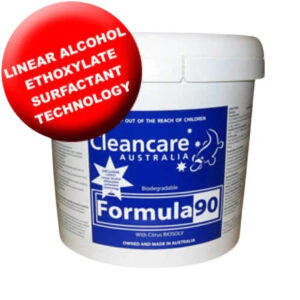
Clean Care’s Formula 90, for example, is described as a heavy-duty general-purpose emulsifying detergent intended for heavily soiled carpeting and extraction cleaning. It can be used with portable and truck-mounted extraction systems when applied according to the manufacturer’s instructions.
Match the Cleaner to Your Carpet Fibre
One of the most important factors when choosing carpet chemicals is fibre compatibility.
Carpets may be manufactured from nylon, polypropylene, wool, natural fibres, solution-dyed materials or stain-resistant fibres. A chemical that works effectively on one construction may not be the preferred option for another.
Before using any powder detergent:
- Check the carpet manufacturer’s care instructions.
- Read the detergent label and technical information.
- Confirm whether the product is suitable for the fibre.
- Test an inconspicuous area where appropriate.
- Follow the recommended dilution instructions.
- Avoid assuming that a stronger solution will deliver a better result.
Clean Care states that Formula 90 is particularly suitable for nylon, polypropylene and compatible synthetic carpets, while different procedures or alternative products may be preferable for wool, natural fibres and stain-resistant carpets.
Following these recommendations helps reduce the risk of using a cleaning chemistry that is unsuitable for the surface.
Check Whether It Works With Your Cleaning Equipment
The cleaning product and equipment need to work together.
Many professional cleaners use portable extraction machines, while larger commercial operations may use truck-mounted systems. Before purchasing a carpet cleaner powder, check whether the manufacturer specifically approves it for the type of machine you use.
A suitable extraction detergent should dissolve properly and work efficiently through the equipment when mixed at the recommended concentration.
Formula 90 is designed for use with both portable and truck-mounted extraction equipment and includes corrosion inhibitors, anti-scaling additives and defoaming components intended to support machine operation.
Pay Attention to Mixing Instructions
Correct dilution matters.
Using more detergent than recommended does not automatically produce a cleaner carpet. Excess chemistry may be harder to rinse and can increase product consumption unnecessarily.
Likewise, using too little may not provide sufficient cleaning action for heavily soiled areas.
Always measure the powder instead of estimating it by eye and prepare the solution according to the manufacturer’s instructions.
Think About Residue After Cleaning
An effective carpet cleaning process should remove soil without creating unnecessary residue.
Residue can matter because some detergent residues may contribute to rapid resoiling if they remain sticky after the carpet dries.
This is one reason to look at how a powder cleaner behaves after extraction and drying.
Formula 90 is formulated to dry into a crystalline powder that can be vacuumed away rather than leaving a tacky, soil-attracting residue, according to Clean Care’s product information.
Even when using products designed to minimise residue, correct extraction and rinsing remain important parts of the cleaning process.
Look Beyond Cleaning Strength
The strongest product is not automatically the most appropriate one.
When comparing carpet cleaning products, consider the complete formulation and how it fits your work.
Useful factors to compare include:
- Fibre compatibility
- Recommended pH range
- Dilution rate
- Cleaning equipment compatibility
- Ease of dissolving
- Residue characteristics
- Defoaming properties
- Water conditioning
- Suitability for different soil levels
- Manufacturer instructions and technical information
For professional cleaners, product concentration can also affect operating costs. A detergent that offers a practical dilution rate may be more economical over repeated jobs than judging value by package price alone.
Use Pretreatment When the Carpet Requires It
Routine carpet cleaning does not always mean adding detergent to the extraction tank and immediately cleaning the entire area.
High-traffic zones often benefit from additional preparation.
A typical cleaning sequence may involve:
- Thoroughly vacuuming the carpet.
- Inspecting the fibre and identifying problem areas.
- Treating suitable stains separately.
- Applying an appropriate traffic-lane cleaner or prespray where required.
- Allowing the recommended dwell time.
- Extracting using correctly diluted detergent.
- Performing any recommended rinse.
- Allowing the carpet to dry thoroughly.
This approach addresses different types of soil instead of relying on one chemical to perform every part of the process.
Avoid Using One Product for Every Carpet
Professional carpet care requires judgment.
A detergent suitable for heavily soiled synthetic commercial carpet may not be the first choice for delicate wool carpet. Similarly, a routine maintenance job may not require the same chemistry as a heavily soiled rental property.
Before cleaning, ask:
What is the carpet made from?
Identify the fibre wherever possible.
What type of soil is present?
Dry soil, grease, food spills and general traffic marks can require different approaches.
How will the carpet be cleaned?
Confirm whether you are using portable extraction, truck-mounted extraction or another method.
Does the manufacturer recommend this application?
Always follow the current product label, safety information and instructions.
These questions can make product selection much more reliable than simply choosing based on marketing claims.
Why Choose Clean Care?
Clean Care Australia supplies a broad range of carpet cleaning chemicals, detergents, stain-removal products, odour-control solutions, cleaning equipment and accessories for professional and general cleaning applications. The company also supplies products for both commercial cleaning businesses and users who need specialised carpet care solutions. Its Formula 90 range is manufactured in Australia and is available in multiple pack sizes, making it easier to select an amount that matches different cleaning requirements.
Make Your Choice Based on the Complete Cleaning Process
Finding the best carpet cleaner powder should not come down to choosing whichever product makes the biggest cleaning claim. The better approach is to consider your carpet fibre, equipment, soil level, cleaning frequency, dilution requirements and the manufacturer’s recommendations.
A product that works well within an established cleaning process can help cleaners achieve more consistent results while also making chemical use easier to manage.
Final Thoughts
Carpet maintenance becomes more predictable when the cleaning chemistry is selected for the actual job. Whether dealing with routine residential cleaning, high-traffic commercial areas or heavily soiled carpets, start by identifying the carpet type and level of contamination before deciding on a detergent.
Use carpet cleaning powder at the correct dilution, follow the manufacturer’s instructions and combine it with proper vacuuming, pretreatment and extraction techniques where required. By focusing on compatibility and correct application rather than cleaning strength alone, homeowners and professional cleaners can make better-informed choices for ongoing carpet care.